Native vs. Multiplatform: What It Means for Mobile Analytics
Before you start planning tracking for a mobile app, find out how it was built. It affects how you test, what can go wrong, and how much work you are signing up for.
Before you start planning tracking for a mobile app, find out how it was built. It affects how you test, what can go wrong, and how much work you are signing up for.
There are two types.
Type 1: Native - One Codebase Per Platform
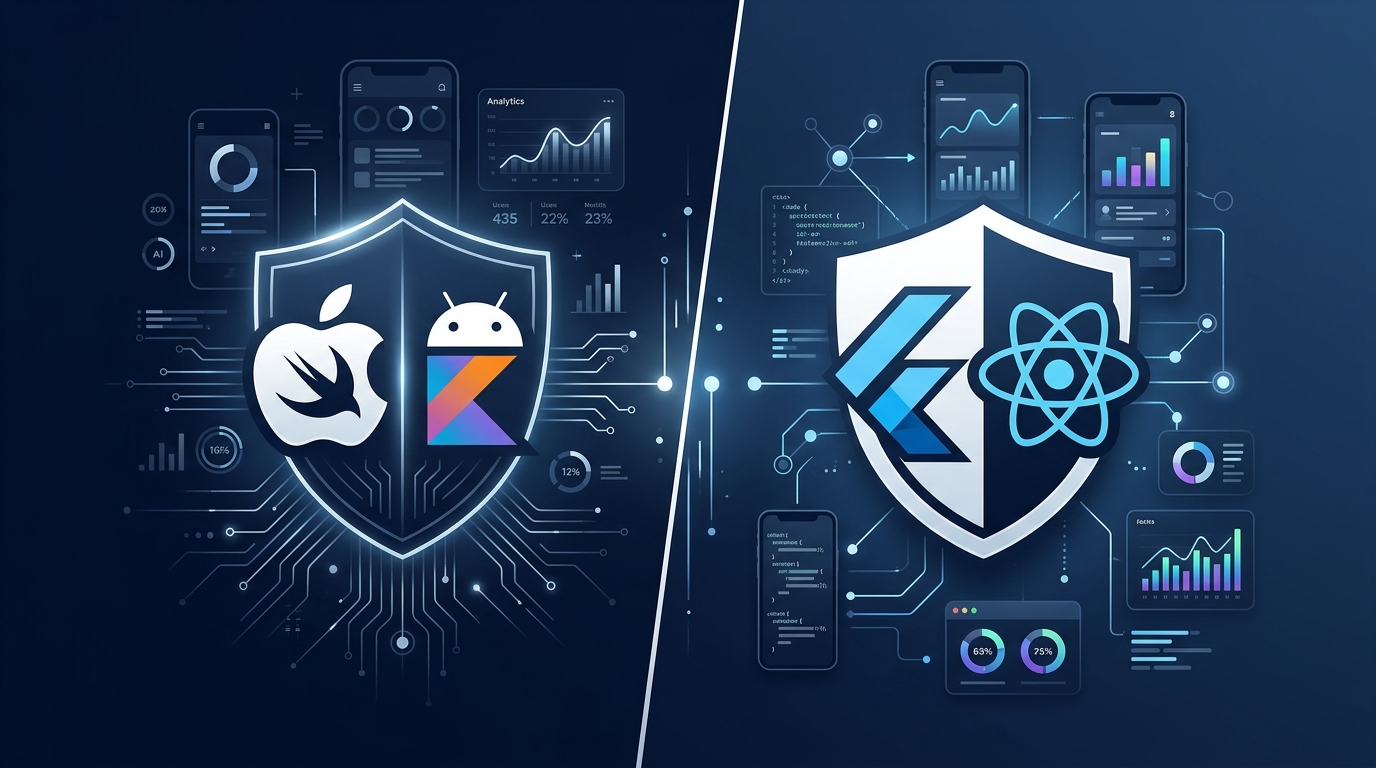
iOS is written in Swift. Android in Kotlin or Java. Two separate codebases, usually two separate dev teams.
This is the traditional approach, still common in larger companies.
What this means for analytics:
Your tracking implementation lives in two places. If an event fires on iOS, that is no guarantee it fires the same way on Android or at all. The two teams work independently, and small differences in how they interpreted the spec add up. An event that fires on screen_view on iOS might fire on button_click on Android. A parameter that is populated on one platform might be null on the other.
You will not always catch this during implementation. Often you catch it three months later when someone asks why iOS conversion rate is 40% higher than Android.
What to do:
- Test both platforms independently. Always.
- Do not assume parity just because the spec said so.
- When you see a metric discrepancy between platforms, the tracking itself is always a suspect.
Type 2: Multiplatform - One Codebase, Two Platforms
React Native and Flutter are the main frameworks here. One codebase, one team, both operating systems covered.
What this means for analytics:
If tracking works on iOS, it works on Android. You test once. The event structure, parameter names, and firing logic are identical across platforms because they come from the same code.
This makes your job easier in almost every way: implementation review, QA, debugging, and long-term maintenance.
The tradeoff is on the dev side (some platform-specific features are harder to implement in multiplatform frameworks), but that is not your problem.
Why It Matters to Know This Upfront
If you are onboarding a new client or starting a new project, ask the dev team early: native or multiplatform?
Native means you budget time to test both platforms separately and you build a QA process that treats iOS and Android as independent implementations, because they are.
Multiplatform means one round of testing is usually enough, and discrepancies between platforms are more likely a data pipeline issue than a tracking issue.
One question, asked early, saves a lot of confusion later.